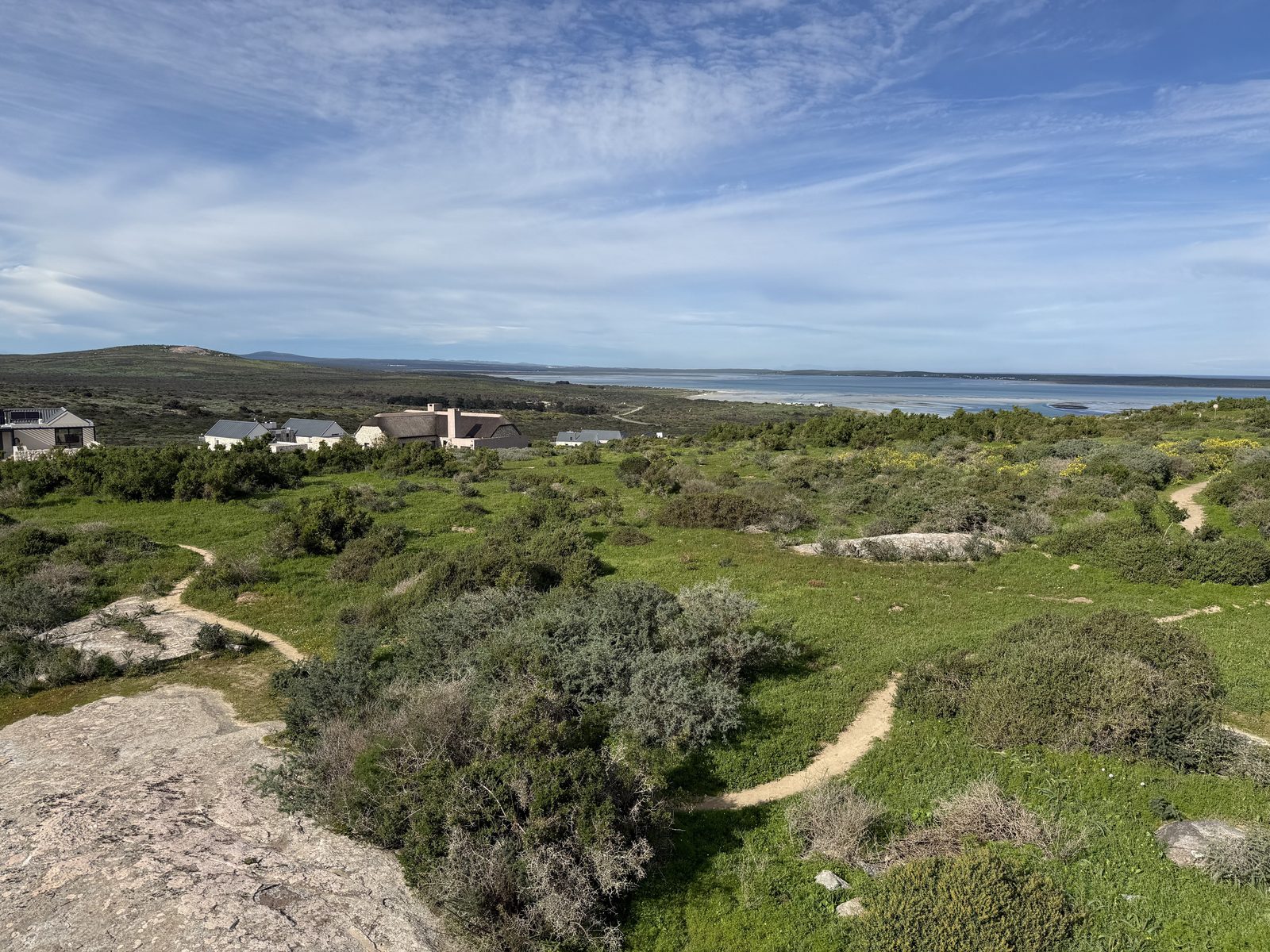
Anyone who's tuned into the live cam over the past few weeks will have noticed it: the hillsides above Shark Bay, usually a dusty gold for most of the year, have turned a rich, saturated green. It's the most visible sign of a proper West Coast winter — and this year's rains have been generous.
A Wet Start to Winter
Langebaan recorded around 140mm of rain in May 2026, followed by a further 30mm in June. For a stretch of coastline that averages closer to 20–30mm a month through the wetter part of the year, May's total stood out — enough to soak deep into ground that had baked hard through months of summer heat and wind.
That kind of rainfall doesn't just wet the surface. It's enough to recharge the shallow water table, fill seasonal pans and depressions across the West Coast National Park, and give dormant seeds and rootstock exactly the trigger they need to get moving.
Why the Landscape Turns Green So Fast
The fynbos and renosterveld vegetation that covers the hills around Langebaan is built for exactly this cycle. Many of the grasses and low shrubs die back or lie dormant through the long dry summer, conserving energy rather than fighting a losing battle against evaporation. The moment consistent rain arrives, that dormancy breaks — new growth pushes up within days, and the visual change across the landscape can happen almost overnight.
It's the same mechanism, on a larger scale, behind the more famous wildflower blooms later in the season (usually August–September). The winter rain is effectively step one: it wakes the vegetation up. The flowers come once temperatures start climbing again in spring.
What It Means Around the Lagoon
- Fuller pans and wetlands — good news for the wading birds that rely on them, with knock-on benefits for birdwatching over the coming months.
- Softer, muddier trails in parts of the West Coast National Park — worth factoring in if you're planning a hike.
- A head start on wildflower season — a wet May and June is typically a promising sign for a strong bloom come August.
- Cooler, cleaner air — rain settles dust and pollen, which often means sharper, longer-range visibility across the lagoon on the live cam.
How Long Will the Green Last?
Not forever — this is still the West Coast. As winter gives way to spring and the rain tapers off, the hillsides will gradually fade back toward their familiar summer gold, usually by mid-to-late spring. For now though, with more cold fronts typically still to come through July and August, there's a good chance the green will hold — or even deepen — before the season turns.
Related Reading
When and where to catch the West Coast's famous spring wildflower bloom.
The Benguela upwelling system explains the West Coast's backwards seasons.